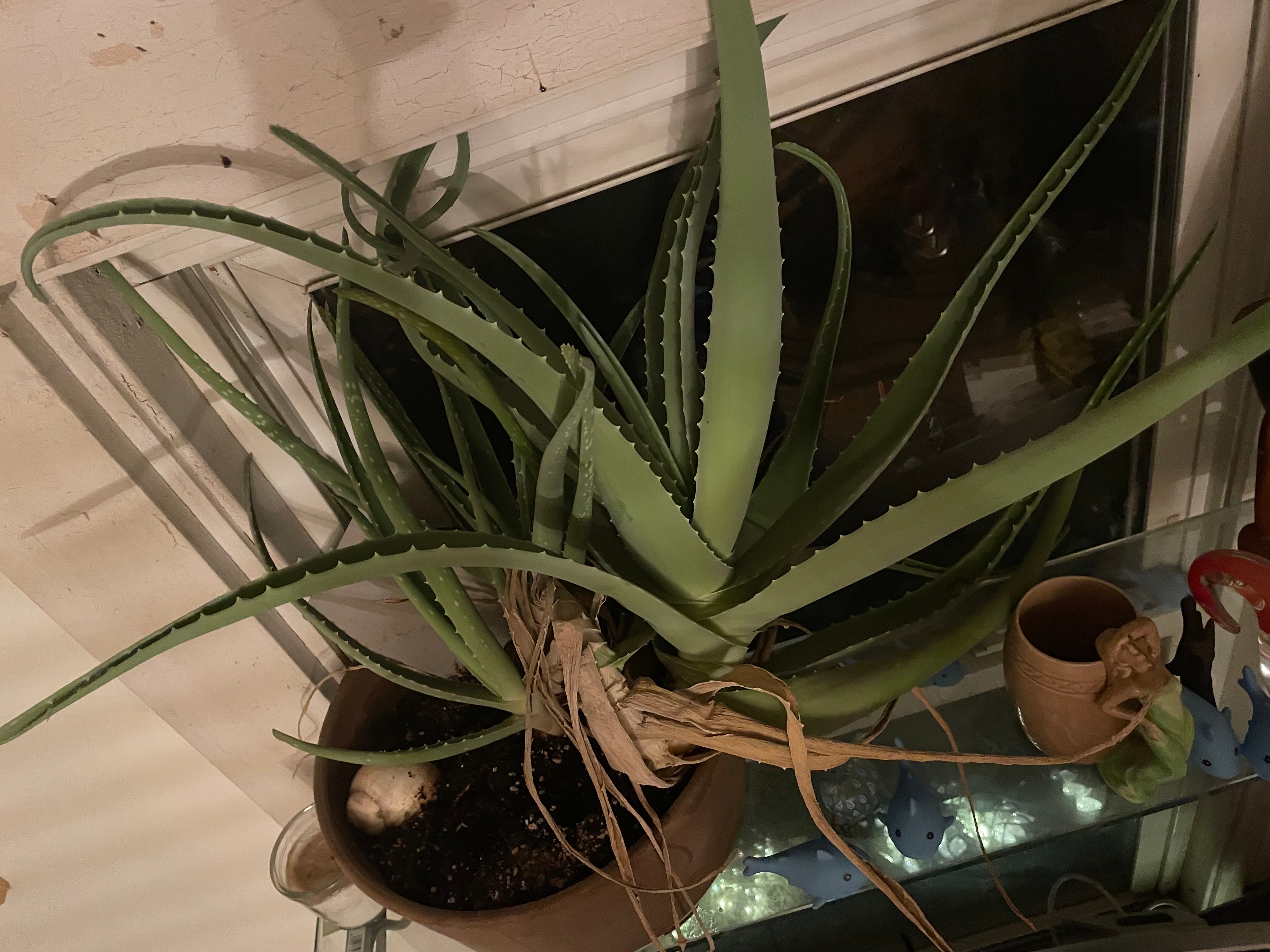
Early this summer, I opened the top half of the window beside my desk at home. A large aloe plant sat on a shelf near the opening.
I don’t remember giving the plant a second thought.
Or a first one.
The window stayed slightly ajar until today, when a nor’easter came through New England. It rained all day, and wind gusts reached 50 mph where we live.
When I stood on my desk to shut the window properly, I couldn’t miss the aloe plant.
In what looks like an attempt to save itself, it has taken on the shape of an octopus. Its center is almost entirely out of the pot, with long arms reaching desperately toward the window.
It’s possible the poor thing just needs water.
Which reminds me.
…
I watered the plant.
It still looks like an octopus.
Not that I expected the oddly still-alive thing to change its entire structure after a few sips.
Or maybe I did.
I think that unrealistic expectation comes from the same place that keeps me checking email and texts and, gulp, LinkedIn, waiting for the next big opportunity to whisk me away to a less octopus-shaped part of my life.
But that’s not how it works.
The aloe didn’t get this way today, and neither did I.
The steady attention required to rebuild a schedule, savings, a career, and roots after a terminal cancer diagnosis that may not actually prove terminal for many years sounds, honestly, about as exciting as watering the houseplants.
I know what the aloe needs.
Water. Light. Regular attention.
Probably more than one small drink after months of neglect.
I know enough to recognize the metaphor. I’m simply not up to creating a daily watering schedule for either of us. Yet.
Maybe I could start by talking to it instead.